

Travelling becomes easier when we already know about the airport where we are going to land. Many people only search for flight tickets, but they forget to check airport facilities, distance from the city, nearby hotels and travel tips. Jabalpur Airport, also known as Dumna Airport, is one of the important domestic airports in Madhya Pradesh. It helps travellers reach wildlife parks, waterfalls and historical places quickly.
When a passenger understands the airport before the journey, the arrival feels smooth instead of confusing and this is why learning the basics of the airport is the first step before planning the rest of the trip.
Jabalpur Airport is a domestic airport located in Madhya Pradesh, India and it mainly serves the city of Jabalpur and the entire eastern region of the state. The airport is also called Dumna Airport because it is situated in the Dumna area. The official airport codes are IATA Code JLR and ICAO Code VAJB which are important for flight tickets and baggage tags. The airport is managed by the Airports Authority of India which is responsible for safety, upgrades and passenger services.
This airport is spread across around 960 acres of land which shows that it has large open space for future development and smooth aircraft movement. In terms of passenger and aircraft movement, it is the third busiest airport in Madhya Pradesh after Indore and Bhopal. Because of its strong activity and large land area, the airport becomes an important travel centre and understanding its location helps travellers plan their arrival better.
Jabalpur Airport is located about 25 kilometres east of Jabalpur city, although some travel platforms mention around 16 kilometres from the city centre depending on which route is measured. Usually, passengers take around 30 minutes by taxi or ride-share to reach the main city.
This difference in distance numbers does not confuse travellers if they remember that both measurements are correct in their own way, because one measures city boundary and the other measures the central point.
The airport is connected by a proper approach road of nearly 5 kilometres which allows vehicles to reach the terminal smoothly without traffic confusion. Taxis, private cars and ride-sharing services are easily available which means passengers do not struggle to find transportation after landing.
Because reaching the city is simple and quick, travellers can confidently move forward to explore nearby attractions which is why knowing the airport’s surrounding importance becomes the next helpful step.
Jabalpur Airport has a very interesting history that goes back many years. The airport was originally constructed during the British era in the 1930s and at that time it was known as Jubbulpore Aerodrome.
During World War periods, the airport was used by the Royal Air Force and Royal Flying Corps which shows its strategic importance in earlier times. In its early days, the runway was only made of dirt and later in the 1960s, a proper paved runway was built on the same alignment to improve aircraft safety.
Even before the Dumna airport officially opened, airplanes used to land inside a racecourse area within Jabalpur city in the 1920s. This shows how aviation slowly developed in the region step by step. As time passed, the airport grew stronger and more modern which naturally led to expansion and upgrades that travellers experience today.
To support growing passenger numbers, the airport underwent large expansion projects. In 2015, the state government provided around 468 acres of additional land to the Airports Authority of India for development.
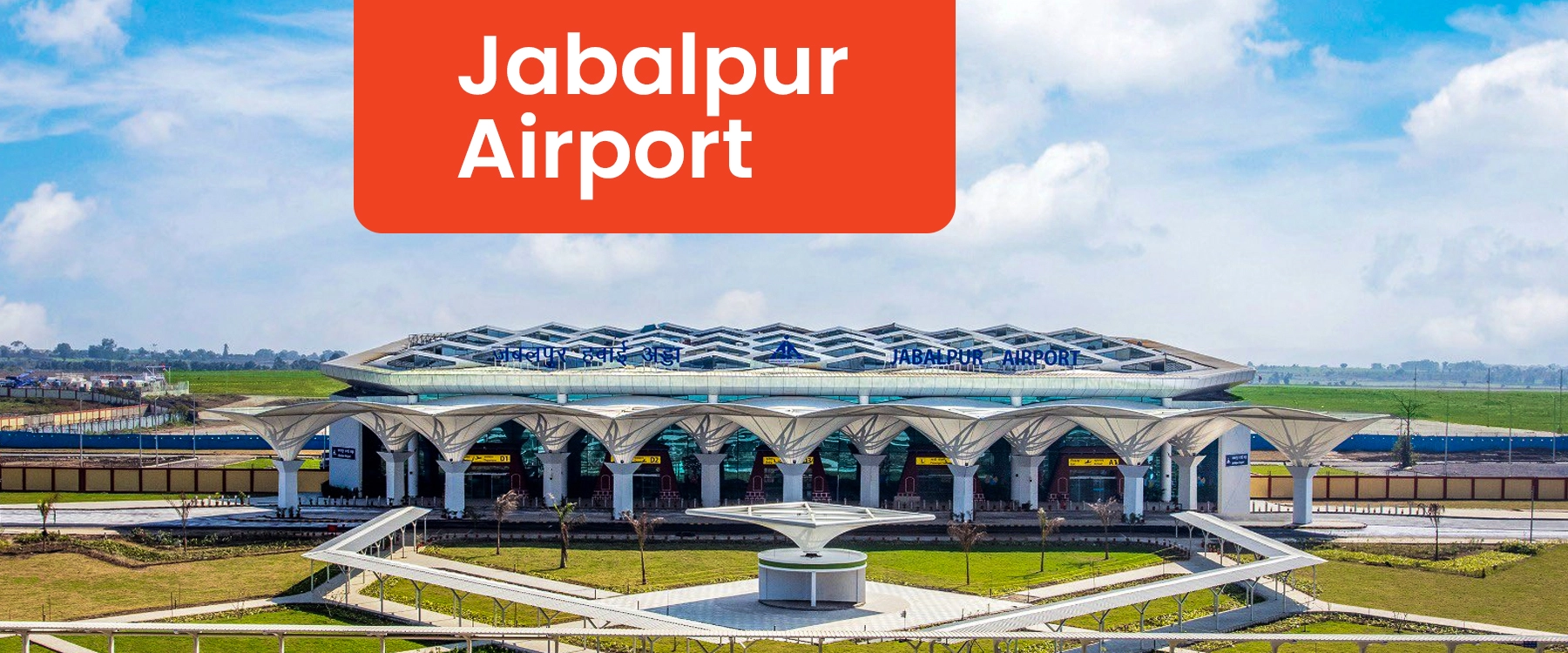
The most important upgrade was the construction of the new terminal building which was officially inaugurated on 10 March 2024. The project cost was approximately ₹412 crore and even though the foundation stone was laid in 2018, the work faced delays due to the COVID-19 pandemic before final completion.
The new development included several modern structures that directly help passengers. The airport now has a 32-metre-high Air Traffic Control tower, a 14-kilometre boundary wall for security, a dedicated fire station, an isolation bay for emergency aircraft parking and a large parking area for more than 250 cars and buses.
Because these upgrades improved safety and space management, the airport started offering a better passenger experience which leads us to understand the runway and aircraft facilities next.
The airport now has a runway length of 2,750 metres which makes it the second longest runway in Madhya Pradesh after Indore. This long runway allows medium-sized aircraft such as Airbus A320 and Boeing 737-800 to land and take off comfortably. The airport is also equipped with night landing facilities which means flights can operate safely even after sunset.
In addition to the runway, the airport has advanced navigation and surveillance systems. These include DVOR/DME, NDB, precision approach path indicators, VHF communication systems, ATIS announcements, CCTV monitoring, explosive trace detectors and flight information display systems.
These systems guide pilots, monitor luggage and inform passengers at the same time. The apron area can park up to four large aircraft simultaneously which improves operational efficiency and reduces delays. Because aircraft handling is smooth and safe, the next important area for travellers is the terminal and its facilities.
The new terminal building, spread across more than 115,000 square feet, is designed to handle around 800 passengers during peak hours. Inside the terminal, passengers will find 14 check-in counters organised security screening zones and advanced baggage X-ray machines that make the entry process faster.
The terminal also has three aerobridges which allow passengers to board aircraft directly without using buses, making travel more comfortable especially for elderly travellers.
For convenience, the airport provides food stalls for refreshments, an ATM machine for cash withdrawal and public announcement systems for flight updates. Medical and assistance services include a first-aid centre and a medical inspection room and there are plans to provide doctors and nurses regularly.
A Tourism Information Centre also helps visitors understand local attractions. Because passengers feel comfortable and supported inside the terminal, they can now focus on airlines and flight options for planning their journey.
Two major airlines currently operate regular services from Jabalpur Airport which are IndiGo and Alliance Air. These airlines connect Jabalpur with important cities such as Delhi, Mumbai, Hyderabad, Bengaluru, Indore, Bilaspur and Jagdalpur.
Direct flights are available which means passengers do not always need layovers. The average flight time from Delhi to Jabalpur is about one hour and thirty-five minutes, making it a short and convenient domestic route.
On average, there are around 64 flights per week which shows strong connectivity. IndiGo is often considered the most popular airline while Alliance Air frequently offers the lowest fares.
The airport’s on-time rating of about fifty-nine percent gives travellers an idea about punctuality expectations. Because knowing flight options is important, understanding when to book and how to save money becomes the next helpful topic.
Travellers who want cheaper tickets usually find February to be the lowest-fare month while April is quieter with fewer crowds. July is the busiest month which often leads to higher ticket prices. Booking flights around forty days in advance generally gives better pricing options. Travel platforms also provide tools such as price alerts, whole-month fare searches and nearby airport options to help passengers save money.
Weather also affects travel planning. May is the hottest month with temperatures reaching 42 °C while January is the coldest and driest month, ranging between 10 and 27 °C. July receives the highest rainfall with nearly 25 rainy days which travellers should consider while packing and scheduling their visit. Once passengers choose the right season and fare, the final step is exploring nearby hotels and attractions.
Travellers who arrive late at night or have early morning flights can stay near the airport at places like StayVista Riverfront Cottage and OYO Hotel Daksh. In the city centre, hotels such as Max Hotels Jabalpur, Vijan Mahal and Sukoon Pearl Inn provide comfortable accommodation.
After settling in, visitors can explore attractions like Dhuandhar Waterfall, Bhedaghat, Sangram Sagar Lake, Kanha National Park and Bandhavgarh National Park. Nearby cities such as Murwara and Damoh are also reachable by road within a few hours.
In simple words, Jabalpur Airport has grown from a historic aerodrome into a modern and well-equipped domestic airport that supports tourism, business travel and comfortable passenger experience.
When travellers understand the airport’s facilities, flight options, weather and nearby places before their journey, they arrive with confidence instead of confusion. This complete knowledge turns a simple flight into a smooth and enjoyable travel experience from the very first step.
1. What is the airport code of Jabalpur Airport?
Jabalpur Airport uses JLR as its IATA code and VAJB as its ICAO code. These appear on flight tickets and luggage tags.
2. How far is the airport from Jabalpur city?
The airport is around 25 km from the city centre and usually takes about 30 minutes by taxi.
3. Which airlines fly from Jabalpur Airport?
Main airlines operating here are IndiGo and Alliance Air, offering flights to major Indian cities.
4. Does Jabalpur Airport have international flights?
No, it currently operates only domestic flights within India.
5. What passenger facilities are available at the terminal?
Passengers can find ATMs, food stalls, medical help, baggage services and flight information screens inside the terminal.
6. Is transportation easily available outside the airport?
Yes, taxis and ride-share cabs are readily available right outside the terminal.
7. Can large airplanes land at Jabalpur Airport?
Yes, the 2,750-metre runway allows medium-sized aircraft like Airbus A320 and Boeing 737 to operate safely.
8. Is parking available at the airport?
Yes, there is a dedicated parking area for cars, taxis and buses near the terminal.
9. Which routes are most commonly served from Jabalpur?
Flights to Delhi are the most frequent, along with regular services to cities like Mumbai, Hyderabad and Bengaluru.
10. What tourist places are close to Jabalpur Airport?
Visitors can easily travel to Bhedaghat, Dhuandhar Falls, Kanha National Park and Bandhavgarh National Park after landing.












/&description=About Jamshedpur Airport (IXW) Flights & Passenger Guide&media=https://crm.flightsmojo.in//UploadedImages/bd4f2d75-4275-496e-9015-8869ad11cae6.webp)
