

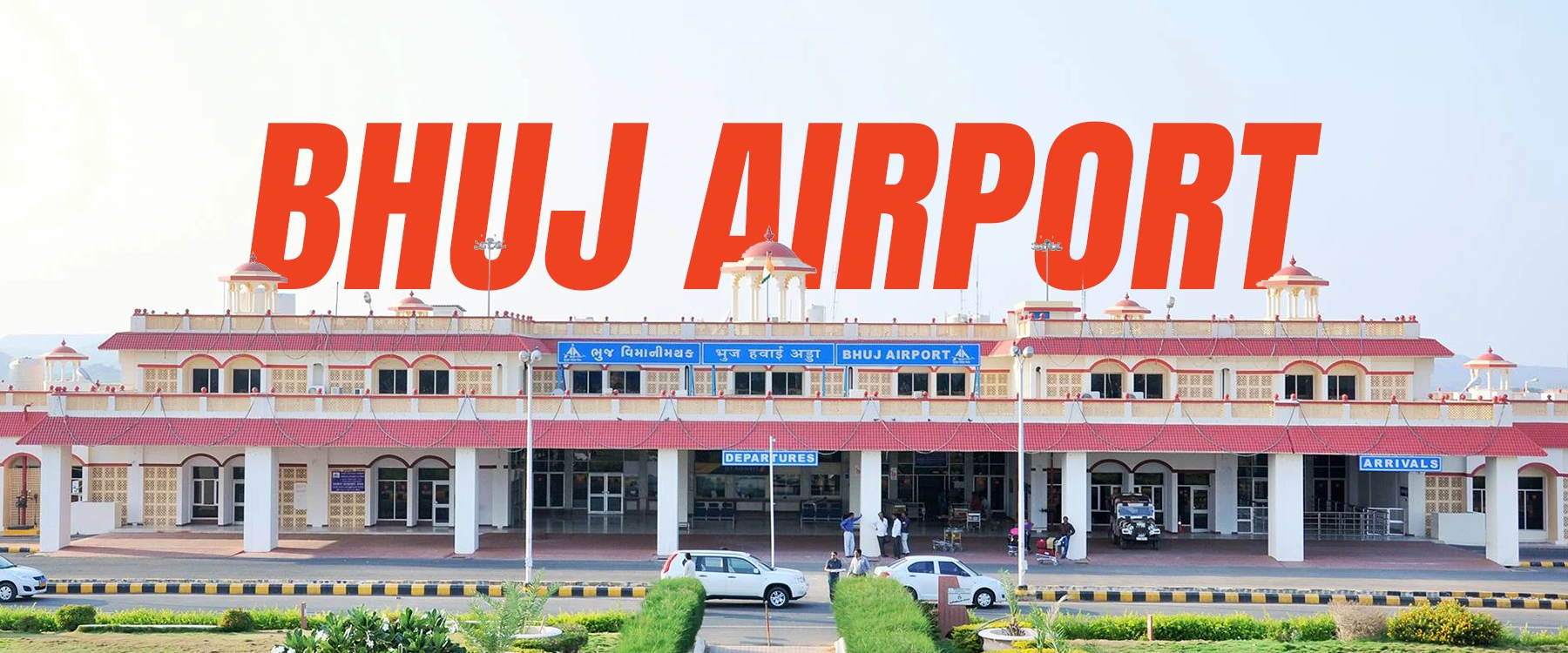
Bhuj Airport operates in Gujarat's Kutch District under the codes BHJ and VABJ. This facility handles both civilian flights and Indian Air Force operations. The airport has survived war, earned recognition for an incredible rebuilding story, and recovered from earthquake damage to become a functioning domestic gateway.
The airport is positioned 4 kilometres from Bhuj city centre. The facility sits at 257 feet above sea level and covers 832 acres of land. The Indo-Pakistan border is 100 miles away, which makes this location important for national security.
You'll find the airport at IAF Campus, Bhuj, Kutch District, Gujarat 370001. The facility shares its runway with an Indian Air Force base, so you'll sometimes see military aircraft alongside civilian planes.
The flight to Bhuj Airport goes by two official names. Some people call it Rudra Mata Airport whilst others use Shyamji Krishna Verma Airport. This confusion started in 2005 when local leaders wanted to rename the facility after freedom fighter Shyamji Krishna Verma. The government said no because they worried foreign travellers might have trouble finding an airport with such a long name.
The Indian Air Force originally built this airport as a military base. During the 1971 war with Pakistan, enemy bombers attacked the airstrip 35 times over just 14 days. Pakistani forces dropped 92 bombs and 22 rockets, including napalm bombs. The runway was completely destroyed.
Squadron Leader Vijay Kumar Karnik commanded the base during these attacks. He worked with two officers, 50 air force personnel, and 60 DSC staff to keep some operations running even whilst bombs fell around them.
After the destruction, something remarkable happened. The government asked 300 women from Madhapar village to rebuild the runway. These women got 72 hours to finish the job whilst the war was still going on. They worked around the clock and completed the task on time. The Government of India later gave these brave women ₹50,000 as recognition for their extraordinary work.
Thirty years after the war, disaster struck again. The 2001 Gujarat earthquake destroyed the original air traffic control tower and damaged much of the airport. The runway cracked and buildings suffered severe structural damage.
Three Indian Air Force officers immediately set up a temporary terminal to handle emergency operations. Over four days, they managed 800 takeoffs and landings whilst rescue work continued. Engineers repaired the damaged runway within hours so planes could land by the afternoon of 26 January itself.
The airport became a lifeline for earthquake victims. Aircraft brought medical equipment from Chandigarh. Helicopters evacuated injured people to Pune and other cities. The Air Force set up medical camps and flew supplies to Bhuj and Jamnagar. The facility functioned as a first aid centre, distributing food and medical supplies to people who'd lost everything.
Rebuilding the airport properly cost ₹400 million. Workers constructed a new terminal with modern facilities. In 2003, Deputy Prime Minister Lal Krishna Advani opened the renovated airport, marking its return to normal civilian operations. The domestic terminal that passengers use today dates from this 2003 renovation.
Bhuj Airport has one terminal that handles all flights. The building has a ground floor measuring 71,920 square feet and a first floor covering 14,880 square feet. The terminal can handle 350 passengers at the same time - 200 people arriving and 200 people leaving.
Four check-in counters process departing passengers. One security checkpoint screens everyone before they reach the boarding gates. The terminal has two gates where passengers board their flights. One main entrance controls who enters the building.
The runway handles aircraft up to Airbus A320 size. The parking area fits two Boeing 737-800 planes at once. A permanent helipad on the airport grounds accommodates helicopter operations when needed.
Getting Help with Your Bags:
Trolleys are free throughout the terminal. You can grab one near the entrance and use it to move your luggage from check-in to the boarding gate or from the aircraft to the exit. Baggage scanners check all bags at arrival and departure points to keep the airport secure. If you lose something, head to the lost and found counter where staff log missing items and help reunite passengers with their belongings.
Finding Your Way Around:
Information desks have staff who answer questions about flights, facilities, and transport options. They can tell you which gate your flight uses, where to find taxis, or how to reach the city centre. If you need a wheelchair or have trouble walking, ask for assistance and someone will help you navigate the terminal. Security personnel patrol the building and can help if you have concerns.
What You Can Eat:
Food counters and small restaurants serve meals and snacks. The menus feature Gujarat's regional cuisine, so you can try local flavours whilst waiting for your flight. Don't expect fancy cafes or lots of choice though. The airport has basic dining facilities, not the extensive food courts you'd find in Mumbai or Delhi. Grab a meal before you go through security if you want more options.
Shopping Options:
Small shops sell newspapers, medicines, and other essentials you might need for your journey. Duty-free shopping is available where you can buy alcohol and tobacco without paying certain taxes. Souvenir shops stock items that reflect Bhuj's culture and crafts. The shopping experience is modest - think convenience store rather than shopping mall.
Staying Connected:
Waiting lounges have comfortable seats where you can sit and relax before boarding. Free Wi-Fi lets you check email, browse websites, or message family. Charging points throughout the terminal keep your phone and laptop batteries topped up. The airport has parking facilities if someone is driving you or if you're leaving your vehicle whilst you travel.
Air India runs flights from Bhuj to Delhi and Mumbai. Alliance Air also flies to Mumbai. These routes connect Bhuj to India's capital city and its financial centre. The airport only handles domestic flights - no international services operate from here. Most passengers fly to Mumbai or Ahmedabad, which are the two main destinations from Bhuj.
Driving or Taking a Taxi:
Roads connect Bhuj to nearby cities through the National Highway network. You can drive your own car, hire a taxi, or catch a bus depending on your preference. Taxis wait outside the terminal and will take you anywhere in Bhuj or surrounding areas. Many hotels send vehicles to collect their guests from the airport, especially if you've booked a nicer hotel and told them when you're arriving.
Using Buses:
The main bus stand is 4 kilometres from the terminal building. State transport buses run between the bus stand and airport regularly. The journey takes about 10 minutes when traffic is normal. Private taxis also cover this route if you prefer door-to-door service.
Bhuj's royal past comes alive through its architecture and cultural landmarks. Medieval kingdoms and rajas once ruled this region, leaving behind palaces, forts, and temples that attract visitors today.
Prag Mahal:
This 19th-century palace combines Gothic and Italian architecture in one grand structure. Detailed carvings cover the walls whilst beautiful balconies overlook the grounds. A tall clock tower dominates the skyline. Inside, rooms display artwork and objects from royal collections. The partially ruined sections add character and make exploration more intriguing.
Aina Mahal:
Thousands of mirrors cover the walls and ceilings of this 18th-century palace, earning it the name Palace of Mirrors. The mirror work is incredibly detailed, complemented by coloured glass windows throughout. Every surface shows careful decoration that reveals how wealthy rulers lived centuries ago.
Kutch Desert Wildlife Sanctuary:
Salt marshes and seasonal wetlands provide habitat for flamingos, including endangered species. Migratory birds stop here during long journeys between continents. Jeep safaris take you through desert landscapes to watch wildlife in scenery completely different from typical Indian destinations.
Bhujia Hill:
Climb to the top for views across Bhuj and surrounding countryside. The summit is perfect for watching sunsets or enjoying quiet away from city noise. A small temple dedicated to Maa Ashapura Devi makes it both a scenic viewpoint and spiritual destination.
Bhujia Fort:
Detailed stonework and old cannons reveal Bhuj's military history. The fort's position gives commanding views over the city below. Walking through connects you to the battles and rulers who shaped this region.
Hotel Nest Bhuj is on Sarah Baug, Airport Road. Seven Sky Clarks Exotica sits on Airport Ring Road in Yogeswar Nagar. Hotel Mangalam is near Mangalam Cross Roads in Sanskar Nagar. Regenta Resort Bhuj by Royal Orchid occupies a spot on the highway in Mirjapar. Other options include The Kutch Safari Lodge, Hotel Kutch Palace, and V.R.P. Guest House.
If you book a decent hotel and tell them your flight time, many will send a car to collect you from the airport. This saves you arranging a taxi and means someone is definitely waiting when you land.
Comparing prices across booking platforms saves money because the same flight often costs different amounts depending where you book. Flexible travel dates help too - flying on Tuesday instead of Friday might save hundreds of rupees.
Booking early typically costs less than last-minute purchases. Airlines raise prices as departure dates approach, especially for popular routes during busy periods.
FlightsMojo gathers flight information from multiple airlines into one search, saving you from visiting dozens of websites separately. The platform updates in real time, showing current availability rather than expired deals. You can filter by departure time if work or family schedules matter, or sort by price to find the cheapest fare first. The search adapts to your priorities instead of making you scroll through irrelevant options
1. What codes identify Bhuj Airport?
The airport uses BHJ as its IATA code and VABJ as its ICAO code. You might see it called either Rudra Mata Airport or Shyamji Krishna Verma Airport - both names refer to the same facility in Bhuj.
2. How do I get from the city to the airport?
Taxis take you directly from anywhere in Bhuj to the terminal. The bus stand is 4 kilometres away with regular state buses. Bhuj Railway Station sits 3.4 kilometres from the airport with taxis, auto-rickshaws, and buses connecting the two. The journey from the city centre takes 10 to 15 minutes normally.
3. Which airlines have flights at Bhuj?
Air India flies to Delhi and Mumbai. Alliance Air operates flights to Mumbai. All services are domestic only - Bhuj doesn't have international flights at the moment.
4. What facilities does the airport have?
You'll find free trolleys, wheelchair help, information desks, food counters, small shops, duty-free shopping, baggage scanners, waiting areas, free Wi-Fi, charging points, and car parking. The terminal has four check-in desks and one security checkpoint.
5. Can I fly internationally from Bhuj?
No, Bhuj Airport only handles domestic flights within India. The main routes go to Mumbai and Ahmedabad. For international travel, you'd need to connect through Mumbai or another major Indian airport.
6. What happened to the airport during the 1971 war?
Pakistani bombers destroyed the runway during 35 raids over 14 days. The government asked 300 women from Madhapar village to rebuild it in 72 hours during wartime. They succeeded and later received ₹50,000 from the Government of India for their remarkable work.
7. How did the 2001 earthquake affect the airport?
The earthquake destroyed the air traffic control tower and damaged the runway and buildings. The airport became an emergency centre for rescue operations, handling 800 flights in four days. The government spent ₹400 million rebuilding it, and the renovated terminal opened in 2003.
8. How long should I spend in Bhuj?
Two to three days lets you see Bhuj's main attractions plus nearby places like Mandvi, Kalo Dungar, and the Rann of Kutch. This gives you enough time without rushing through everything.
9. When is the best time to go to Bhuj?
October through March has comfortable weather for sightseeing. The Rann Utsav festival happens in winter and is a special time to experience local culture. Summer gets very hot, making outdoor activities uncomfortable.
10. How many people can the airport handle?
The terminal can process 350 passengers at once - 200 arriving and 200 departing at the same time. The facility has two boarding gates and four check-in counters to manage passenger flow.









/&description=About Bhuj Airport (BHJ) Information – Flights, Terminals & Services&media=http://crm.flightsmojo.in//UploadedImages/19f65de7-f1b5-4d00-bb80-35fd704c8d0c.webp)